Bee & Wasp Removal
Bee and wasp removal starts with the insect and nest.
A temporary swarm, exposed wasp nest, carpenter-bee opening, and colony inside a wall are different jobs. Describe what you can see safely and compare a scope matched to the situation.
Connect with an independent provider. Confirm address coverage, availability, scope, and price before hiring.
Bee identification & visual comparisons
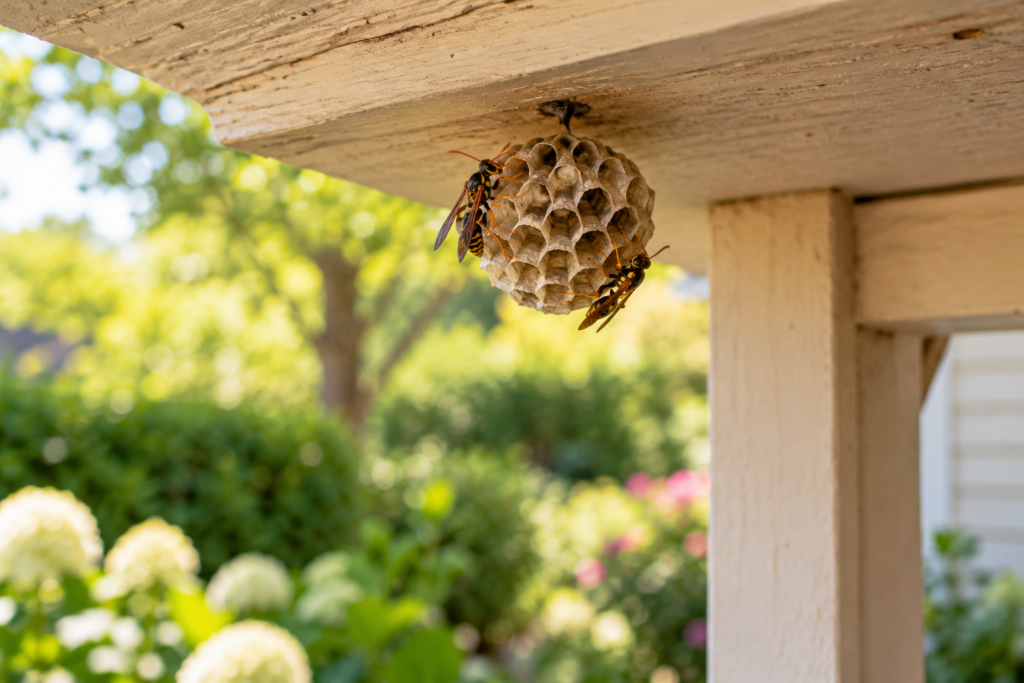
Is it a bee, a wasp, or a look-alike?
Compare body hair, shape, and nesting clues together. These examples help you describe a concern; they cannot confirm the insect at your property. Colors, sizes, and markings vary by species, region, and individual.
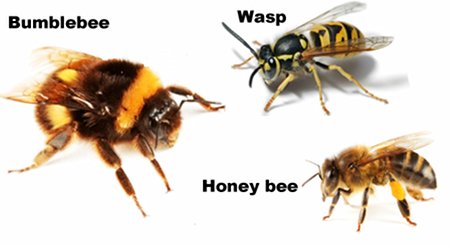
Start with shape and hair—not yellow stripes alone.
Honey bees and bumble bees are hairy compared with many familiar social wasps. A bumble bee is usually rounder and fuzzier than a honey bee. Wasps often show a more obvious narrow waist.
Use a zoomed photograph taken from a safe position. Do not catch an insect, approach a nest, or open a wall to get a better view.
| Insect group | Typical appearance | Nesting clue | What to ask about |
|---|---|---|---|
| Honey bee | Hairy thorax; often golden-brown with darker abdominal bands. | A wax-comb colony may occupy a cavity; a visible hanging cluster may be a swarm. | Ask about honey-bee identification and collection versus structural colony removal. |
| Bumble bee | Rounded, noticeably fuzzy body; colors and patterns vary. | Often a sheltered cavity, including some ground-level sites. | Discuss whether the nest can be left undisturbed and how household access can be managed. |
| Large carpenter bee | Can resemble a bumble bee; part of the upper abdomen is relatively bare and shiny. | Round openings and galleries in wood may be a clue. | Ask about current activity, treatment scope, and the timing of wood repairs. |
| Paper wasp | Slender body and distinct waist; often long legs. | Exposed, umbrella-like comb with open cells. | Describe the location and access needed; ask how the nest will be assessed. |
| Yellowjacket | Usually a compact, less-hairy wasp with strong yellow-and-black markings. | May nest underground or in a concealed cavity. | A soil entrance alone does not confirm the species. Keep mowing and digging away. |
| Hornet-type wasp | Appearance varies; bald-faced hornets are dark with pale markings, unlike a typical yellowjacket. | An enclosed paper nest can be a useful clue, but the nest does not identify every species. | Ask the provider to identify the insect, nesting location, and safe access requirements. |
Bumble bee or large carpenter bee? Look at the abdomen.
The abdomen is the rear body section. Many large carpenter bees have a relatively smooth, shiny area on top of it, while bumble bees have a hair-covered abdomen. This comparison is a starting clue—not a rule for every bee.
Bumble bee: fuzzy rear body
Look for hair across the abdomen. Do not confuse a black patch of hair with a smooth surface. Bumble bee patterns vary, so yellow bands alone are not the deciding feature.
Large carpenter bee: shiny section
Look for a bare-looking, glossy upper abdomen. Fresh round wood openings can support the inspection, but an old hole alone does not establish an active nest.
Simplified abdomen diagrams, not to scale. See Cornell’s side-by-side bee photographs →
Compare the nesting situation, too.
The same word—“nest”—can describe very different work. Share the visible shape and exact location rather than assuming every case needs the same removal method.

Bee cluster or swarm
A hanging cluster can be a temporary honey-bee swarm. Ask about identification and swarm collection; do not treat this as proof of a colony inside the building.
Exposed open comb
Visible cells on an uncovered paper comb can point toward paper wasps. Explain which door, walkway, or maintenance area is nearby without moving closer.
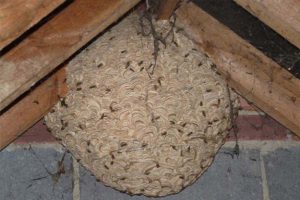
Enclosed paper nest
A paper envelope hides the comb inside. Ask about species, height, and access. Do not cut it open or knock it down to inspect the contents.
What a photograph cannot settle
An insect on a flower may simply be foraging. A hole in soil, a quiet interval, or an old nest does not confirm an active colony or its species. Ask for identification before authorizing work, especially when the proposed work includes opening a structure or treating a concealed space.
Prepare a useful identification request.
Share your city and state, where you saw the insect, whether there is repeated traffic into one opening, the approximate height, and what normal activity is blocked. Include a safely taken overview photo and a zoomed image if available. A local Extension identification service or the inspecting provider may be able to help.
Penn State Extension: carpenter bee appearance and wood nesting →
Start with the findings
Describe the location before assuming a treatment.
Tell the provider where insects enter, the approximate height, the structure involved, and whether the activity blocks normal access. Photographs taken from a safe distance may help the first conversation. Do not disturb a nest or open a concealed space to investigate.
Cluster or repeated entry?
A visible bee cluster and repeated traffic into a building opening raise different service questions. Ask whether the provider handles swarm collection, structural colony removal, or both.
Exposed paper nest
An open comb beneath a sheltered surface can be a useful clue for paper wasps. Describe nearby doors, play areas, or maintenance access without approaching the nest.
Wood, soil, or a concealed gap
An entry hole alone does not identify the insect. Report fresh wood debris, a fixed soil entrance, or repeated entry into a wall and ask how the provider will confirm the species.
Know what you are comparing
Match the estimate to the actual nest.
These are questions to discuss with the company performing the work. Methods and included services vary by provider and property.
| Part of the job | Start with this question | Details to confirm |
|---|---|---|
| Swarm collection | Is this a temporary cluster that can be collected? | Ask about identification, access, specialist availability, collection, and whether relocation is offered. |
| Concealed colony | What must be opened, removed, cleaned, and restored? | Confirm colony and comb removal, access work, cleanup, follow-up, and who handles building repairs. |
| Wasp or hornet nest | Where is the active nest and how will it be reached? | Compare treatment, nest removal, high-access equipment, exclusion timing, and any return visit. |
Before the appointment
Keep normal household tasks away from active nesting.
Avoid mowing, digging, pressure washing, or moving stored items around a suspected active nest. Do not block a used opening before assessment. Ask the provider to explain when an area can be used again and how treatment, cleanup, and repairs should be sequenced.
Read the independent reference →Ask specifically about honey-bee relocation.
Collection and structural colony removal are specialist services, and availability varies. Confirm whether relocation is practical for the identified insect and location. A bee-removal request does not guarantee relocation, comb cleanup, or building restoration; list those items separately in the estimate.
Get the complete price in writing.
Confirm inspection fees, covered areas, preparation, return visits, exclusions, payment terms, and any renewal charges. Ask for warranty or retreatment terms separately.
Use the estimate checklist →Common questions
Bee & Wasp Removal questions.
Are all bees, wasps, and hornets treated the same way?
No. Identification, nesting location, access, and the property determine the options to discuss. Ask what the provider has identified and why the proposed work fits the findings.
Should I seal the entry hole?
Arrange assessment before blocking an active opening. Ask the provider when entry repairs should take place in relation to colony or nest work.
Does removal include repairing the wall or roof?
Not automatically. Ask who opens and restores the structure, whether another contractor is needed, and which charges and follow-up visits are included.
Who performs the work and confirms availability?
Bro’s is a connection and referral resource. Independent providers confirm the address, services, credentials, appointment, and price. You decide whether to hire; the provider handles the work and service agreement.
Continue with useful information
Find your next step.
Discuss the problem at your property.
Have your location, property type, and a description of the evidence ready. Ask the independent provider to confirm the proposed next step and complete price.
Sources & further reading
General service-planning information compiled by Bro’s Pest Control. An on-site inspection determines the findings at your property. Sources are independent of Bro’s. References checked October 24, 2026.