
Bro’s Pest Control · Visual comparison tool
What pest am I seeing?
Turn a quick sighting into better questions. Narrow the possibilities, compare real reference photos, and find the right guide before choosing treatment.
Start with what you noticed ↓11 common household pest groups · No signup · No photo upload


What did you notice?
Choose only the clues you could actually see. Leave uncertain answers set to “Any / not sure.” Each filter narrows the list; results are possibilities, not a diagnosis.
Browse all 11 pest groups.
Choose Compare on two or three cards, then use the comparison section below. Select a photo to open a larger reference in a new tab.
Bed bugs
Reference example · Photos are not to scale
Look for: Flat, oval adults with six legs; younger bugs may be pale. Bed bugs crawl rather than jump or fly.
Evidence, look-alikes & next steps
Where to inspect: Check mattress seams, the bed frame and nearby furniture for live bugs, dark spotting, eggs and shed skins.
Common confusion: Fleas jump; carpet beetle larvae are hairy. Bat bugs can require expert examination.
Next step: Keep physical evidence and request identification before moving belongings or choosing treatment.

Fleas
Reference example · Photos are not to scale
Look for: Small, wingless insects with bodies flattened sideways and prominent jumping legs.
Evidence, look-alikes & next steps
Where to inspect: Look for actual insects on pets or around their bedding; ask your veterinarian about flea-comb findings.
Common confusion: Springtails also jump, but are associated with moisture and do not bite.
Next step: Coordinate veterinary pet care with cleaning resting areas. Follow animal-specific product instructions.
Carpet beetle larvae
Larva shown · Photos are not to scale
Look for: Elongated larvae with bristles or hairs. Adults look quite different: small, rounded beetles, sometimes mottled.
Evidence, look-alikes & next steps
Where to inspect: Look for shed larval skins, lint and damage to susceptible wool, feathers or animal-based materials.
Common confusion: Bed bugs are not covered in long bristles. A larva and an adult beetle can belong to the same group.
Next step: Find the feeding material, remove lint and hair, and clean suitable fabrics according to their care labels.
Springtails
Reference example · Photos are not to scale
Look for: Very small, wingless creatures that may spring away when disturbed. Some are elongated; others are rounded.
Evidence, look-alikes & next steps
Where to inspect: Recurring activity around damp soil, sinks, showers or plumbing points toward a moisture problem.
Common confusion: Fleas also jump. Location and an actual specimen help distinguish them; jumping alone is insufficient.
Next step: Investigate leaks, condensation and overwatering. Springtails do not bite people or pets.

Pantry moths
Reference example · Photos are not to scale
Look for: Small moths near stored food; Indianmeal moth adults have contrasting pale and darker outer wing areas.
Evidence, look-alikes & next steps
Where to inspect: Inspect dry foods, pet food and packages for webbing, larvae and infested contents. Larvae can wander away.
Common confusion: Clothes moths are associated with susceptible fabrics. Not every kitchen moth is an Indianmeal moth.
Next step: Remove infested products, clean storage crevices and seal unaffected food. Avoid spraying food-storage surfaces as a shortcut.

Ants
Reference example · Photos are not to scale
Look for: A narrow, pinched waist and bent antennae are useful clues. Reproductive ants may have wings.
Evidence, look-alikes & next steps
Where to inspect: Follow recurring trails to food, moisture or entry points. Record whether activity is near damaged wood.
Common confusion: Winged termites have a broad waist and relatively straight antennae; compare intact wings as well.
Next step: Clean spills, seal food and record entry routes. Have persistent activity identified before selecting a control method.

Termites
Reference example · Photos are not to scale
Look for: Workers are generally pale. Winged termites have a broad waist and front and hind wings of similar length.
Evidence, look-alikes & next steps
Where to inspect: Indoor swarmers, shed wings, mud tubes or unexplained wood damage call for a structural inspection.
Common confusion: Winged ants have a pinched waist, bent antennae and larger front than hind wings. Wood damage alone cannot confirm termites.
Next step: Photograph evidence and retain a swarmer if safe. Ask the inspector to identify the termite type and extent of activity.

Cockroaches
Reference example · Photos are not to scale
Look for: Flattened bodies and long antennae. Young roaches resemble smaller adults and may lack developed wings.
Evidence, look-alikes & next steps
Where to inspect: Record insects and egg cases around appliances, plumbing and hiding spaces. Species can change the response.
Common confusion: Beetles may have shorter antennae and hard wing covers. A quick sighting is not enough to identify a roach species.
Next step: Reduce food, water and clutter and ask about monitoring and identification. Some roaches enter from outdoors.
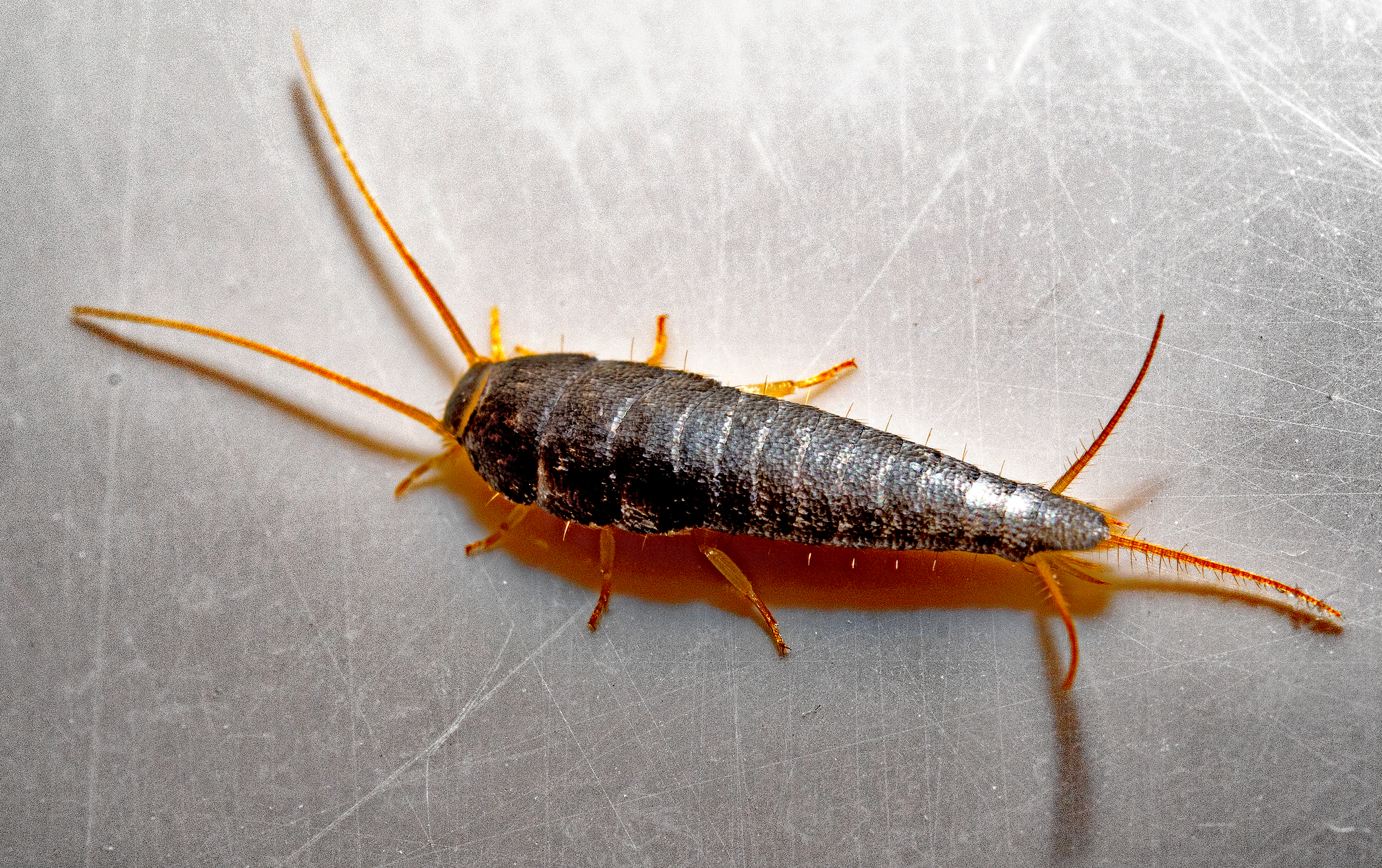
Silverfish & firebrats
Reference example · Photos are not to scale
Look for: Wingless, tapered bodies with long antennae and three thin tail filaments. Silverfish are silvery; firebrats are often mottled.
Evidence, look-alikes & next steps
Where to inspect: Look around sheltered storage and paper, book bindings or starchy materials for surface feeding damage.
Common confusion: Earwigs have rear pincers, not three long filaments. Similar bristletails may need closer examination.
Next step: Reduce damp hiding places and clutter, and inspect vulnerable stored items before considering treatment.

Spiders
Widow example shown · Photos are not to scale
Look for: Eight legs and no antennae. Some make capture webs; others hunt without a web.
Evidence, look-alikes & next steps
Where to inspect: Record a safely photographed animal, its web and location. The example photo shows one widow, not all spiders.
Common confusion: Ticks also have eight legs as nymphs and adults. A body marking or skin lesion alone does not confirm a spider species.
Next step: Avoid handling unknown spiders. Ask for expert identification when uncertain; many house spiders are beneficial predators.

Mice & rats
Rat example shown · Photos are not to scale
Look for: Furry mammals with prominent incisors and long tails. Young rats can be mistaken for mice.
Evidence, look-alikes & next steps
Where to inspect: Gnaw marks, nesting materials, sightings and entry routes are useful together. Sounds alone cannot identify the animal.
Common confusion: Attic scratching may also involve squirrels or other wildlife. This rat photo is not a mouse identification key.
Next step: Keep people and pets away from contamination. Do not sweep or vacuum droppings; follow CDC cleanup guidance.
Compare the clues side by side
Useful starting comparisons: bed bugs, fleas and carpet beetle larvae; ants and termites; or fleas and springtails. Differences in life stage and damaged specimens can hide identifying features.
Select two or three Compare checkboxes in the photo cards above.
Give an expert better evidence
1. Photograph safely
Take a clear top view, a side view if safe, and a wider image of the setting. Include a ruler near a safely contained insect. Do not approach nests, handle unknown spiders, or disturb wildlife for a photo.
2. Record the context
Write down the date, city/state, room, approximate size, number seen and movement. Photograph nearby skins, wings or damage without touching contamination.
3. Confirm the identity
Ask a qualified pest professional or your local Extension office ↗ how to submit a specimen. This tool does not upload, analyze or send photographs.
Droppings or nesting material? Leave contamination undisturbed while documenting it. Do not sweep or vacuum rodent droppings. Follow CDC cleanup guidance ↗.
From identification to a clear plan
Confirm the pest before comparing treatment prices. A general household service price may not include termites, bed bugs, wildlife, repairs or follow-up visits.
Plan a budget
State cost calculators
Planning ranges, not a diagnosis or a guaranteed quote. Confirm the proposed scope with each independent provider.
Still unsure what you found?
Describe the evidence when requesting help. Ask the independent provider to confirm identification, exact-address availability, inspection fees and the proposed work before agreeing to treatment.
Request pest control help →Bro’s is an information and referral resource. Independent providers perform inspections and treatment.
Sources, method & photo credits
The filters use broad, manually assigned characteristics from EPA and university guidance. They do not calculate probabilities, inspect a property or identify every species. One selected clue can fit several pests; an absent match is inconclusive. Each card links to its reference guidance. Local species and life stages vary.
Open all identification references
- Bed bugs: identification guidance ↗
- Fleas: identification guidance ↗
- Carpet beetle larvae: identification guidance ↗
- Springtails: identification guidance ↗
- Pantry moths: identification guidance ↗
- Ants: identification guidance ↗
- Termites: identification guidance ↗
- Cockroaches: identification guidance ↗
- Silverfish & firebrats: identification guidance ↗
- Spiders: identification guidance ↗
- Mice & rats: identification guidance ↗
Photo credits & licenses
Photos show reference examples, not equal-size specimens. Images are displayed proportionally; no diagnostic AI-generated images are used in this tool. Termite, ant, roach, rat and spider photos are existing Bro’s media-library references.
- Bed bugs: CDC / World Health Organization — original image / credit ↗ · Public domain. Display resized, not cropped.
- Fleas: Evanherk — original image / credit ↗ · CC BY-SA 3.0 ↗. Display resized, not cropped.
- Carpet beetle larvae: UF/IFAS — original image / credit ↗. Display resized, not cropped.
- Springtails: Alexis Tinker-Tsavalas — original image / credit ↗ · CC BY 4.0 ↗. Display resized, not cropped.
- Pantry moths: Pudding4brains — original image / credit ↗ · Public domain. Display resized, not cropped.
- Silverfish & firebrats: Géry PARENT — original image / credit ↗ · CC BY-SA 4.0 ↗. Display resized, not cropped.
Sources checked October 25, 2026. External references and larger images open in new tabs. Reference links do not imply endorsement.
↑ Back to the tool