
Pest Identification Guide
What pest is in your home? Compare photos, body features and the evidence pests leave behind—then choose a sensible next step.
8 common pest groups · Look-alike comparisons · Practical checklists
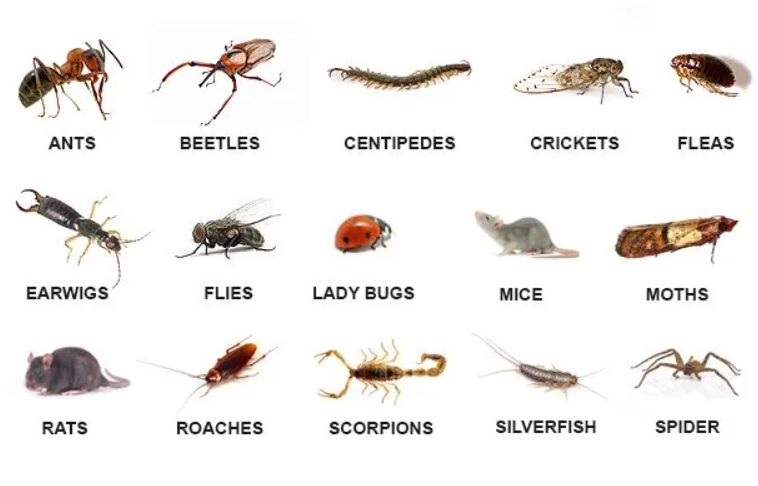
Start with evidence, not a guess
Look at the pest
Note its approximate length, shape, legs, antennae and movement. Does it jump, fly or follow a trail? Color alone is rarely enough.
Record the setting
Write down the room, exact location, date and how many you saw. Photograph stains, damage or shed skins without disturbing the area.
Confirm before treating
Use several clues together. When unsure, ask a local extension office or qualified pest professional to identify a safely contained insect specimen.
Common household pest photo library
Search a pest name or clue, such as “wings,” “jumping,” “wood” or “droppings.” These are starting points for identification, not a diagnosis.
Showing 8 pest groups

Bed bugs
What to look for: Flat, oval insects; adults are reddish brown. Younger bugs are smaller and paler.
Where / evidence: Check mattress piping, bed frames and headboards for live bugs, dark spots, shed skins and tiny eggs.
First step: Bite marks alone cannot confirm bed bugs. Preserve a specimen and inspect nearby hiding places before moving belongings.
EPA identification guidance (opens in a new tab) ↗↑ Back to pest library
Termites
What to look for: Workers are often pale and soft-bodied. Winged swarmers have a broad waist and two pairs of similarly sized wings.
Where / evidence: Earthen tubes between soil and wood are a subterranean termite clue. Swarmers indoors or damaged wood deserve inspection.
First step: Photograph the location and save a swarmer. Ask for an inspection that identifies the termite type and extent of activity.
University identification guidance (opens in a new tab) ↗↑ Back to pest library
Ants
What to look for: A pinched waist and bent antennae help separate ants from termites. Workers usually have no wings.
Where / evidence: Follow trails to food, moisture or an entry gap. Carpenter ants excavate wood for nests rather than eating it.
First step: Wipe up spills, seal food and note the entry point. Repeated trails or activity around damaged wood need closer investigation.
University identification guidance (opens in a new tab) ↗↑ Back to pest library
Cockroaches
What to look for: Broad, flattened bodies and long antennae; young roaches resemble smaller, wingless adults.
Where / evidence: Inspect warm crevices near appliances and plumbing. Look for live insects and egg cases, and use monitoring traps safely.
First step: Reduce food, water and clutter. Species matters: some breed indoors while others enter from outside. Avoid foggers as a quick fix.
University identification guidance (opens in a new tab) ↗↑ Back to pest library
Mice & rats
What to look for: House mice are smaller and have relatively large ears. A young rat can resemble a mouse, so body size alone is unreliable.
Where / evidence: Gnawing, nesting material, droppings and repeated sightings are useful clues. Roof rats often use elevated spaces; Norway rats commonly burrow.
First step: Photograph from a distance. Do not sweep or vacuum droppings; follow the CDC cleanup guidance below. Keep children and pets away.
University identification guidance (opens in a new tab) ↗↑ Back to pest library
Spiders
What to look for: Spiders have eight legs and no antennae. Many indoor spiders are beneficial predators.
Where / evidence: Webs, egg sacs and sheltered corners show activity. Some species hunt without a capture web.
First step: Avoid handling an unknown spider. A general resemblance or a skin mark is not a reliable species identification. Photograph safely and ask an expert if uncertain.
University identification guidance (opens in a new tab) ↗↑ Back to pest libraryFleasAppearance + location + evidence
Fleas
What to look for: Tiny, wingless insects flattened from side to side. Jumping is a useful clue, though other small insects can jump too.
Where / evidence: Check pet resting areas and discuss flea-comb findings with your veterinarian. Adult fleas may be on an animal while immature stages are in its surroundings.
First step: Coordinate pet care with cleaning of bedding and resting areas. Use only products appropriate for the animal and follow veterinary and label guidance.
University identification guidance (opens in a new tab) ↗↑ Back to pest libraryCarpet beetlesAppearance + location + evidence
Carpet beetles
What to look for: Adults are small, rounded beetles, sometimes mottled. Larvae are elongated and hairy rather than flat like bed bugs.
Where / evidence: Look for larvae, shed skins and feeding damage around wool, feathers, lint or stored animal-based fabrics. Adults may appear at windows.
First step: Inspect the material where larvae are feeding. Clean lint and hair, and launder or dry-clean suitable items according to their care instructions.
University identification guidance (opens in a new tab) ↗↑ Back to pest libraryNo matching pests. Try a broader clue or clear the filters. An unlisted pest can still be present.
Common look-alikes: compare the right features
Termites vs. flying ants
Check all three features on an intact winged insect. Broken wings or a blurry photo can hide the difference.
| Feature | Winged termite | Winged ant |
|---|---|---|
| Waist | Broad, without a narrow pinch | Noticeably pinched |
| Antennae | Relatively straight, beadlike | Elbowed / bent |
| Wings | Front and hind pairs similar in length | Front pair larger than hind pair |
| Next step | Save a swarmer; arrange a structural inspection if found indoors | Identify the ant and locate activity before choosing control |
Bed bugs vs. fleas vs. carpet beetles
| Clue | Bed bugs | Fleas | Carpet beetles |
|---|---|---|---|
| Appearance | Flat, oval; no hairy covering | Tiny, narrow from the front; flattened sideways | Rounded adults; hairy, elongated larvae |
| Movement | Crawl; do not jump or fly | Adults can jump | Larvae crawl; adults can fly |
| Evidence to seek | Live bugs, dark spotting, eggs and cast skins in hiding places | Fleas on pets or near resting areas | Larvae, skins and damaged susceptible fabrics |
| Useful inspection area | Bed frame, mattress seams, nearby furniture | Pet bedding, carpets and upholstered resting areas | Closets, fabric storage, carpet edges and lint |
Mouse vs. rat
Use the whole animal and the activity pattern. House mice typically have a small body and relatively large ears. Rats are generally larger, but a juvenile rat can be misleading. Norway rats are stockier and often burrow; roof rats are slimmer climbers with long tails. Scratching in an attic or droppings alone cannot reliably identify the species.
Where did you find the pest?
Location helps you decide where to inspect next. It does not prove which pest is present.
Bedroom & living room
Compare bed bugs, fleas and carpet beetles. Check furniture seams, pet resting places and nearby fabric storage.
Kitchen & bathroom
Start with ants and cockroaches. Record trails, entry gaps, plumbing moisture and activity near stored food.
Windows & damaged wood
Compare winged ants and termites. Photograph shed wings and the surrounding wood. Keep a sample for identification.
Take a photo that helps an expert identify it
A clear photo with context is more useful than a close-up with no size reference. Use this checklist before requesting help.
- Take three views: the whole pest from above, a side view if safe, and a wider photo showing where it was found.
- Show size: place a ruler near a safely contained insect. Record body length separately from wings or antennae.
- Keep the original file: avoid filters, heavy sharpening or a screenshot of a zoomed image.
- Capture evidence: photograph nearby damage, stains, wings or shed skins. Do not handle droppings or disturb nests.
- Write the context: date, city/state, room, number seen and whether it crawled, jumped or flew.
- Preserve safely: only contain a small insect if you can do so without contact or risk. Do not handle stinging insects, unknown spiders or rodents.
When should you request an inspection?
If you rent, the apartment pest-control guide helps turn sightings into a useful report and coordinate the inspection with management. If you have animals, the pet-owner preparation guide helps organize species-specific questions before treatment. Both include practical examples and planning worksheets.
- Suspected termites: indoor swarmers, shelter tubes or unexplained wood damage warrant a closer look.
- Possible bed bugs: save physical evidence and request confirmation promptly; avoid moving potentially infested items between rooms.
- Repeated roach or rodent activity: ask about the pest species, entry points and a monitoring plan.
- Uncertain identification: request identification before agreeing to a pest-specific treatment.
Need help with the next step?
Bro’s Pest Control is a pest control connection resource. Describe the pest and evidence when requesting help; the service provider should confirm identification, scope and treatment options.
Request pest control help Find your location · Explore servicesPest identification FAQs
Can I identify a pest from a photo alone?
Sometimes a clear image supports a likely identification. Tiny insects, immature stages and close look-alikes may require a specimen or specialist. Combine appearance, scale, location and physical evidence.
Does one insect mean I have an infestation?
One sighting does not establish the extent of a problem. Save the evidence and look for repeated activity. A suspected bed bug or termite deserves prompt confirmation even when only one is found.
Are flying ants always termites?
No. Compare the waist, antennae and both pairs of wings. Flying ants have a pinched waist, elbowed antennae and larger front wings. Winged termites have a broader waist, straighter antennae and similarly sized wing pairs.
Should I spray before I know what the pest is?
Identify it first. Treatment choices depend on the pest and where it lives. Start by recording evidence and removing accessible food or water sources. Follow any pesticide label exactly and ask for identification when uncertain.
Do city pest rankings tell me what is in my home?
No. A city ranking describes the data used in that report. Your home needs its own evidence and, when appropriate, an inspection. Regional rankings cannot confirm an individual infestation.
Sources & editorial notes
Compiled by Bro’s Pest Control from public EPA, CDC and university extension resources. This is a general U.S. household guide; local species and conditions vary. It is not an inspection report. Photos are existing Bro’s media-library examples and are not to scale. External reference links open in new tabs.
- UC IPM: Ants (opens in a new tab) ↗
- UC IPM: Subterranean and other termites (opens in a new tab) ↗
- EPA: How to find bed bugs (opens in a new tab) ↗
- UC IPM: Fleas (opens in a new tab) ↗
- UC IPM: Carpet beetles (opens in a new tab) ↗
- UC IPM: Cockroaches (opens in a new tab) ↗
- UC IPM: House mouse (opens in a new tab) ↗
- UC IPM: Rats (opens in a new tab) ↗
- UC IPM: Spiders (opens in a new tab) ↗
- CDC: How to clean up after rodents (opens in a new tab) ↗