
Beavercreek Bee Control & Extermination
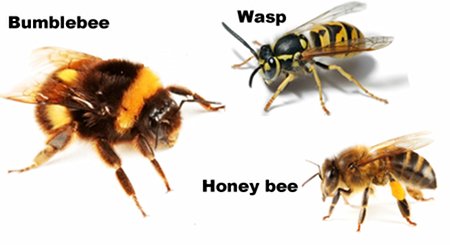
Bees, wasps, hornets, and yellow jackets can become a safety concern when they build nests near doors, decks, playgrounds, garages, walkways, or other frequently used areas. Attempting to knock down or spray an active nest can provoke defensive insects and lead to multiple stings.
Bro’s Pest Control helps Beavercreek homeowners and businesses connect with pest-control professionals who inspect and treat stinging-insect problems. A local provider can identify the insect, locate its nest, and recommend appropriate removal, relocation, or control based on the species and nesting location.
Service may be available for houses, apartments, rental properties, restaurants, offices, retail locations, and other properties throughout Beavercreek and the Greater Dayton area.
Call 1-888-497-9069 to request bee, wasp, or hornet removal in Beavercreek, Ohio.
Professional Stinging-Insect Control in Beavercreek
Correct identification is an important first step. Honey bees, bumble bees, carpenter bees, paper wasps, yellow jackets, and bald-faced hornets have different behaviors and nesting habits. What appears to be a bee nest may actually belong to a more defensive species of wasp.
A professional inspection may include:
- Rooflines, soffits, and eaves
- Siding and exterior wall openings
- Attics and wall voids
- Decks, railings, and patio furniture
- Trees and shrubs
- Garages, sheds, and outbuildings
- Holes in lawns and landscaped areas
- Utility boxes and equipment
- Areas around doors and windows
- Wood fencing, fascia, and trim
Once the insect and nesting location have been identified, the provider can explain whether the colony should be treated, physically removed, relocated, monitored, or left undisturbed.
Areas Served Near Beavercreek
Bro’s Pest Control helps customers request stinging-insect service in Beavercreek and surrounding Greene and Montgomery County communities. Provider availability may extend to:
Beavercreek Township, Fairborn, Xenia, Bellbrook, Centerville, Kettering, Riverside, Dayton, Oakwood, Yellow Springs, and nearby southwestern Ohio communities.
For help recognizing native bees and wasps, view the Bees and Wasps of Ohio Field Guide from the Ohio Department of Natural Resources.
Wasps Commonly Found Around Beavercreek Properties
Several types of stinging insects may nest around homes and businesses in southwestern Ohio.
Paper Wasps
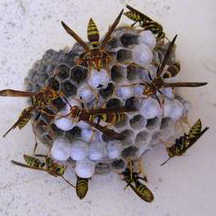
Paper wasps build open, umbrella-shaped nests with visible cells. Their nests are frequently found underneath eaves, porch ceilings, railings, decks, sheds, and outdoor furniture.
A small nest in an isolated location may not cause a problem. Professional treatment may be appropriate when the nest is close to an entrance, play area, seating area, or other frequently used space.
Yellow Jackets
Yellow jackets may nest underground, inside wall voids, beneath steps, around landscaping, or in abandoned animal burrows. They can defend their colonies aggressively, particularly when a nest is disturbed.
Common signs include:
- Repeated activity entering a hole in the ground
- Insects traveling through a siding or wall opening
- Numerous yellow jackets around outdoor food or trash
- Buzzing inside a wall or ceiling
- Yellow jackets unexpectedly appearing indoors
Do not seal an active wall opening before the colony has been addressed. Trapped insects may search for another way out and enter the occupied part of the building.
Bald-Faced Hornets
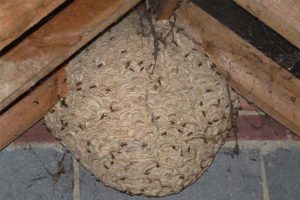
Despite their name, bald-faced hornets are a type of social wasp. They build enclosed, gray, paper-like nests that may hang from trees, shrubs, roof overhangs, utility structures, and buildings.
These insects can strongly defend an active nest. Keep people and pets away from the area and avoid shaking the branch or structure supporting it.
Mud Daubers
Mud daubers create narrow tubes or clusters of mud on protected walls, garages, sheds, and other structures. They are generally less defensive than social wasps because they do not live in large colonies.
An inspection can determine whether the nest is active and whether removal is necessary.
What Happens During Bee or Wasp Service?
Exact procedures vary according to the insect and location, but professional service may include:
1. Inspection and identification
The provider evaluates insect appearance, flight patterns, nest construction, and entry points to identify the likely species.
2. Nest assessment
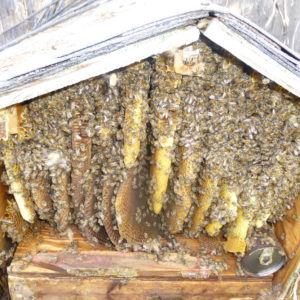
The technician determines whether the nest is exposed, underground, or hidden inside a structural cavity.
3. Treatment or removal plan
Depending on the situation, service may include targeted treatment, nest removal, swarm collection, live relocation, structural extraction, or monitoring.
4. Follow-up recommendations
Some nests or concealed colonies require follow-up service. The technician may recommend monitoring the entrance before it is sealed.
5. Exclusion and repair
Once activity has ended and nesting materials have been properly addressed, accessible openings may be sealed to reduce future entry. Confirm whether repairs are performed by the exterminator or require a separate contractor.
For Bee Control Beavercreek, Ohio Call, 1-888-497-9069Bumble Bee Nest Removal
Bumble bees commonly nest in protected cavities such as abandoned rodent burrows, landscaping, wall voids, sheds, and spaces beneath decks.
Because bumble bees are beneficial pollinators, an undisturbed nest away from people may sometimes be left in place until seasonal activity ends. Professional assistance may be appropriate when a nest is located near:
- A doorway or walkway
- A child’s play area
- A deck or patio
- Lawn equipment
- A pet enclosure
- Someone with a known sting allergy
A technician can identify the species and discuss whether treatment, relocation, or monitoring is the most appropriate option.
Carpenter Bee Control in Beavercreek
Carpenter bees create nesting tunnels in bare or weathered wood. They may repeatedly use fascia boards, deck railings, roof trim, wooden siding, fences, and outdoor structures.
Signs of carpenter-bee activity include:
- Round holes in wood
- Coarse sawdust beneath an opening
- Yellow or brown staining below a hole
- Bees hovering near decks or rooflines
- Woodpecker damage around existing tunnels
Carpenter bees do not eat wood, but repeated nesting can weaken or discolor affected material. Treatment may need to address active tunnels, existing brood, and conditions that make the wood attractive.
Do not seal active holes immediately. Ask the pest professional when the openings should be repaired and whether the wood should be painted, stained, or otherwise protected afterward.
Bee and Wasp Nest Locations
Stinging insects may build nests in visible or concealed spaces, including:
- Under roof eaves
- Behind siding
- Inside wall voids
- Under decks and porch steps
- In trees and shrubs
- Inside sheds and garages
- Beneath outdoor furniture
- Inside playground equipment
- Around utility boxes
- In holes in the lawn
- Inside unused vehicles or equipment
- Around chimneys and attic vents
Concealed nests can be difficult to locate. Repeated flight activity entering and leaving the same opening is often an important clue.
