
Last Updated on August 26, 2026
Bee, Wasp and Hornet Removal in Sumner, WA
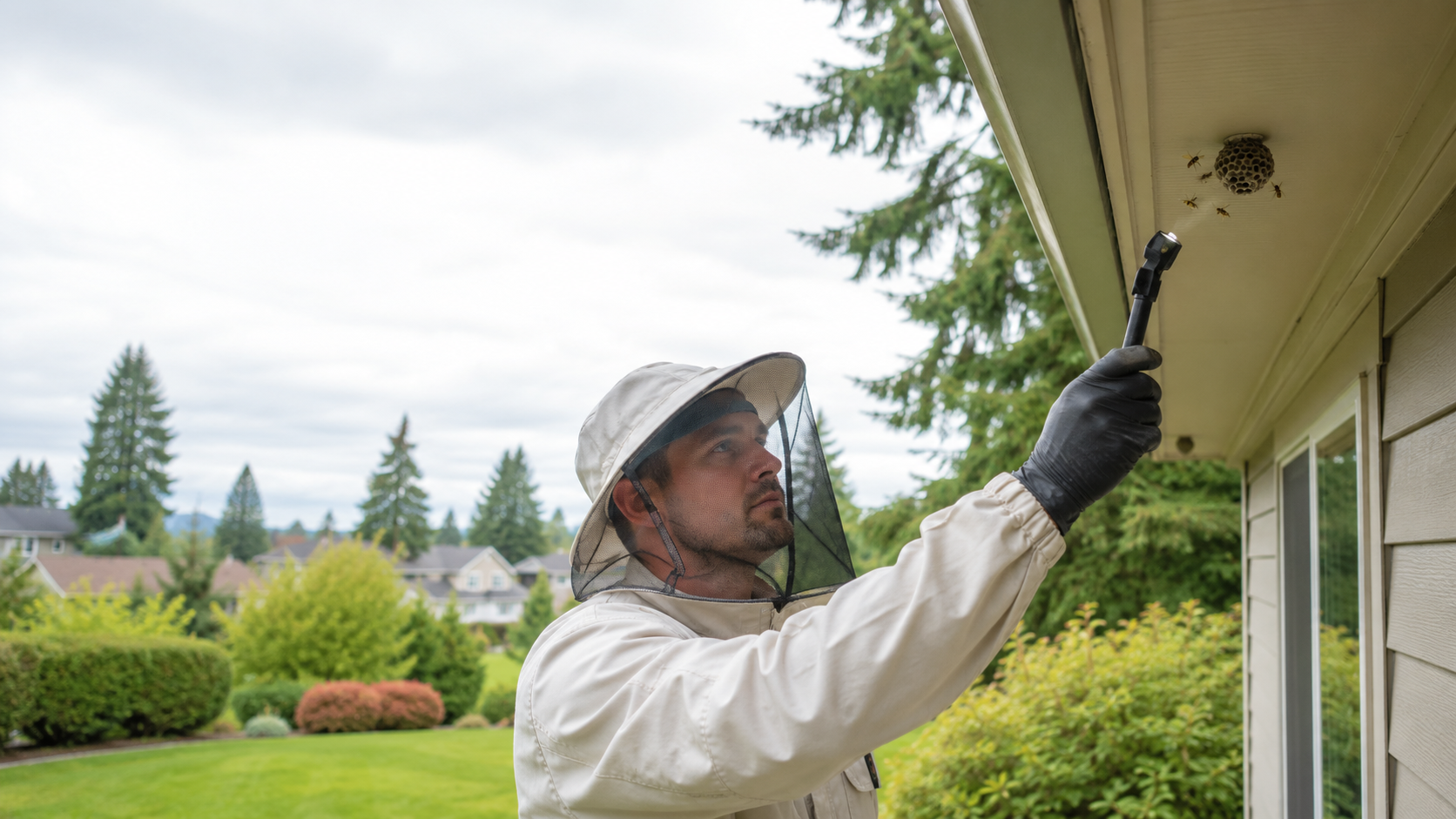
Bees, wasps, hornets, and yellow jackets can become a serious concern when they nest near entrances, patios, decks, playgrounds, garages, or other frequently used areas. Disturbing an active nest may cause the insects to defend it, potentially resulting in multiple painful stings.
Bro’s Pest Control helps Sumner homeowners and businesses connect with pest-control professionals who inspect and address stinging-insect problems. A local provider can identify the insect, locate the nest, and recommend treatment, removal, relocation, or monitoring based on the species and nesting location.
Service may be available for homes, apartments, rental properties, offices, restaurants, retail locations, warehouses, and other properties throughout Sumner and the surrounding Pierce County area.
Call 1-888-497-9069 to request bee, wasp, hornet, or yellow jacket removal in Sumner, Washington.
Professional Stinging-Insect Control in Sumner
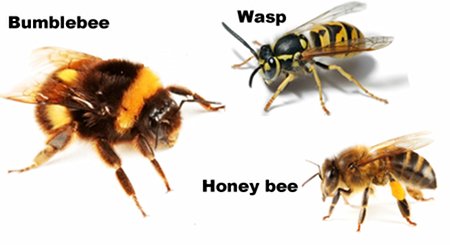
Not every flying insect around a property requires extermination. Washington is home to hundreds of native bee species, many of which are solitary, beneficial pollinators that are unlikely to defend a large colony.
Yellow jackets and other social wasps may be far more defensive around their nests. Correct identification helps determine whether insects should be treated, relocated, monitored, or left alone.
A professional inspection may include:
- Roof eaves and soffits
- Siding and wall openings
- Attics and crawl spaces
- Decks, railings, and patios
- Trees, shrubs, and hedges
- Garages, sheds, and outbuildings
- Holes in lawns or landscaping
- Utility boxes and equipment
- Door and window frames
- Wooden fencing and trim
Repeated insects entering and leaving the same opening often indicate a nearby nest.
Service Areas Near Sumner
Bro’s Pest Control helps customers request bee and wasp control in Sumner and surrounding Pierce County communities. Provider availability may extend to:
Puyallup, Bonney Lake, Lake Tapps, Edgewood, Pacific, Auburn, Algona, Buckley, Orting, Milton, Fife, South Hill, and nearby Washington communities.
Only create separate landing pages for these communities when each page contains unique local information rather than a city-name substitution.
Yellow Jacket Removal in Sumner
 Yellow jackets are among the more concerning stinging insects found around western Washington properties. They can nest underground, inside wall voids, beneath steps, in landscaping, or inside abandoned animal burrows.
Signs of a yellow jacket nest may include:
- Repeated activity around a hole in the ground
- Wasps entering a gap in siding or roofing
- Buzzing inside a wall or ceiling
- Numerous wasps gathering around trash or outdoor food
- Yellow jackets unexpectedly appearing indoors
- Defensive activity near a lawn, hedge, or structure
Yellow jackets can sting multiple times and may defend an active colony aggressively. Keep people and pets away from a suspected nest and avoid mowing, digging, or operating equipment near the entrance.
Do not seal an active opening in a wall or roof. If the primary exit is blocked, insects may find another route into the occupied part of the building.
Paper Wasp Nest Treatment
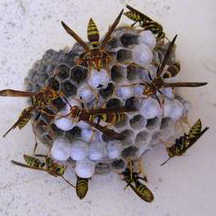
 Paper wasps make open, umbrella-shaped nests with visible cells. These nests are commonly attached beneath eaves, porch ceilings, deck railings, outdoor furniture, sheds, and other sheltered surfaces.
A small nest in an isolated location may not require immediate removal. Treatment may be appropriate when it is near:
- A frequently used entrance
- A deck, porch, or patio
- Children’s play equipment
- Outdoor seating
- Pet areas
- A walkway or parking space
- Someone with a known sting allergy
A pest professional can identify whether a nest is active and explain the appropriate treatment or removal process.
Bald-Faced Hornet Nest Removal
Bald-faced hornets are actually a type of social wasp. They build enclosed gray paper nests that can become substantial as the colony grows. Nests may hang from trees, shrubs, roof overhangs, utility structures, and buildings.
Do not shake the supporting branch, spray the nest from close range, or attempt to knock it down. Bald-faced hornets can vigorously defend their colony when threatened.
Professional service may include evaluating the nest’s height, accessibility, activity level, and proximity to people before choosing a treatment and removal plan.
Honey Bee Swarm Removal in Sumner
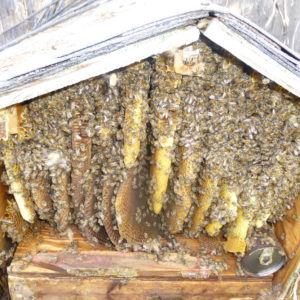
Honey bees are valuable pollinators, and relocation may be preferred when it is practical and safe. A temporary swarm resting on a tree or fence is different from a colony that has established comb inside a wall, roof, chimney, or other structural cavity.
Honey bees inside a structure
 Removing an established honey bee colony from a wall or roofline may require specialized structural work. Simply killing or removing visible bees can leave behind honey, wax, brood, and comb.
Depending on accessibility and provider capabilities, service may involve:
- Finding the colony entrance
- Locating comb inside the structure
- Removing or relocating the colony
- Extracting accessible comb and honey
- Cleaning the nesting cavity
- Repairing and sealing openings afterward
Ask whether the provider performs live relocation, structural opening, comb removal, cleanup, and repairs. These may be separate services.
Temporary honey bee swarms
A swarm can look like a large cluster of bees hanging from a branch, fence, post, or building. Swarming bees are usually searching for a permanent nesting location.
Keep children and pets away and contact a beekeeper, bee-removal specialist, or qualified pest professional. The Washington State Department of Agriculture notes that a swarm may move on within approximately 24 hours, while established colonies may require removal assistance. Washington State Department of Agriculture
 Residential and Commercial Service
Stinging-insect service may be available for:
- Houses and townhomes
- Apartments and rental properties
- Restaurants
- Retail stores
- Offices
- Schools and childcare properties
- Warehouses
- Industrial facilities
- Healthcare properties
- Property-management companies
Commercial properties may benefit from inspections around entrances, loading docks, outdoor dining spaces, trash enclosures, landscaping, and customer walkways.
Preventing Bee and Wasp Nests
The following steps may make nesting less likely or help detect colonies early:
- Repair damaged screens
- Keep outdoor trash containers closed
- Clean up spilled food and drinks
- Inspect eaves, decks, and sheds during spring
- Repair damaged siding and exterior trim
- Seal appropriate openings after confirming they are inactive
- Paint or seal unfinished wood where appropriate
- Trim vegetation that blocks exterior inspections
- Check outdoor furniture and play equipment
- Watch for repeated flight activity around walls or the ground
Never seal an opening while insects are actively using it.
For Bee Control Sumner, Washington Call, 1-888-497-9069Schedule Bee or Wasp Removal in Sumner
Do not risk disturbing an active nest near your home, yard, or business. Bro’s Pest Control can help connect you with a pest-control professional serving Sumner, Washington.
Call 1-888-497-9069 to request an inspection or estimate for bee, wasp, hornet, yellow jacket, bumble bee, or carpenter bee control.
Frequently Asked Questions
What stinging insects are common around Sumner?
Properties in western Washington may experience yellow jackets, paper wasps, bald-faced hornets, honey bees, bumble bees, mason bees, and other native species. Nest shape, location, appearance, and behavior help determine the species.
Should I remove a wasp nest myself?
Professional help is strongly recommended for concealed, underground, elevated, or heavily active nests. Disturbing a colony can result in multiple stings.
Can honey bees be relocated?
Some swarms and accessible colonies can be relocated. Established colonies inside walls or roofs may require structural extraction, comb removal, cleanup, and repairs.
Should I seal a hole used by yellow jackets?
Not while it is active. Sealing the entrance can force yellow jackets farther into a wall or indoor space. Address the colony first and seal the opening at the appropriate time.
When are yellow jackets most active in Sumner?
Activity generally increases during the warmer months. Colonies grow through summer and often become particularly noticeable in late summer and early fall.
Do wasps reuse old nests?
Most social wasps do not reuse the same paper nest the following year. However, a protected location may attract a new queen, so prevention and periodic inspection can still help.
Are all ground-nesting bees yellow jackets?
No. Washington has beneficial solitary bees that nest in soil and are generally much less defensive. Correct identification helps avoid unnecessary treatment.
Are northern giant hornets still present in Washington?
The northern giant hornet was declared eradicated from the United States in December 2024 after no confirmed Washington detections since 2021. Do not use “murder hornets” as a target keyword or imply that they are a current Sumner pest.
