Last Updated on October 24, 2026
TEQUESTA, FLORIDA · HOMEOWNER GUIDE
A branch cluster or a tree cavity
Bee and wasp help for Tequesta homeowners, with practical observations, local address information, and questions to ask before arranging removal.
Request a quote Call 1-888-497-9069
Connect with an independent provider. Services and availability vary.
A branch cluster or a tree cavity in Tequesta
At a Tequesta property, confirm the actual street address and any yard access restrictions when calling. A mailing-city reference alone does not tell the provider which building needs assessment.
A hanging bee cluster and repeated entry into a hollow tree are different situations. Observe the location from a safe distance and leave pruning on hold nearby. Tell the provider whether insects form an exposed cluster or travel through one opening; avoid probing the cavity or cutting the branch.
What to explain when calling
Describe cluster versus cavity entry and planned tree work.
Bro’s Pest Control connects Tequesta homeowners with independent pest-control professionals serving their area. The provider confirms the address, insect identification, qualifications, scope, price, and appointment availability.
Using the full service address in Tequesta
Use the complete physical address when confirming coverage. A mailing city or ZIP can cover locations beyond municipal boundaries, and a PO Box does not tell the provider where an inspection is needed.
Match the service to the insect and nest
Observe from a safe, separate position. Do not catch insects or disturb a nest for identification. These signs help describe the concern; an inspection may still be needed.
Carpenter bees and wood
Round entry holes and fresh sawdust near exposed wood may indicate carpenter bees. Old holes alone do not confirm current use. Describe where insects enter and ask how treatment and any wood repairs should be sequenced.
Honey-bee swarm or colony?
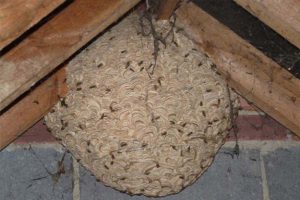
A cluster on a branch can be a temporary swarm. Repeated entry into a wall or hollow structure can indicate an established colony. Collection, structural removal, comb cleanup, and repairs are different scope items; ask what the provider offers.
Paper wasps
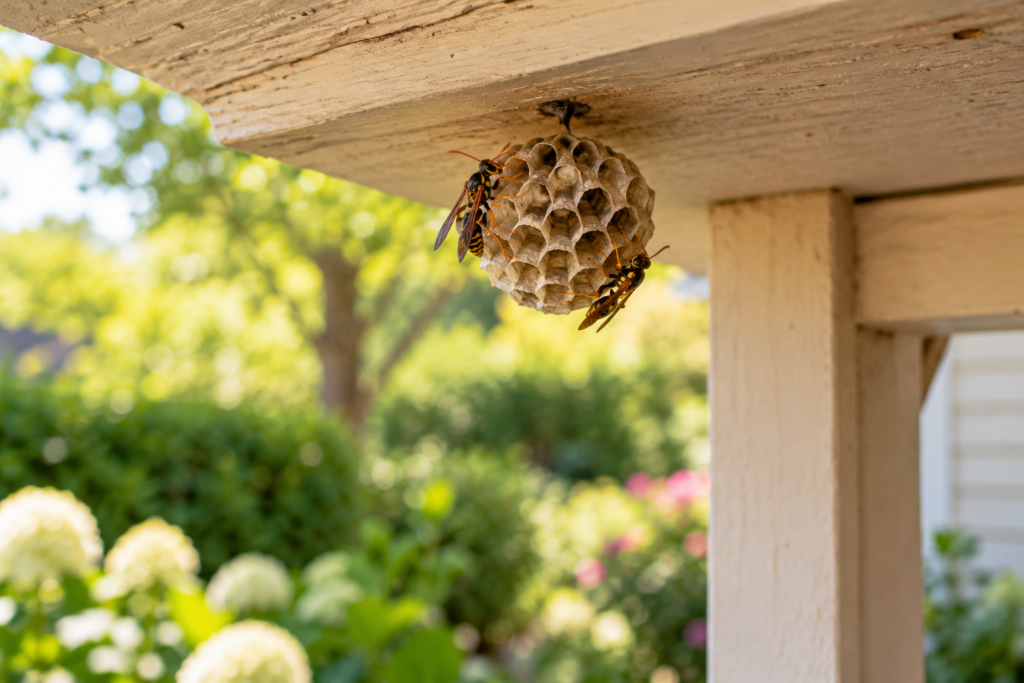
An exposed comb beneath a sheltered surface can indicate paper wasps. Describe the location and nearby household access without approaching. Do not remove the supporting cover, board, or fixture while nesting is active.
Bumble bees, yellowjackets, and concealed nests
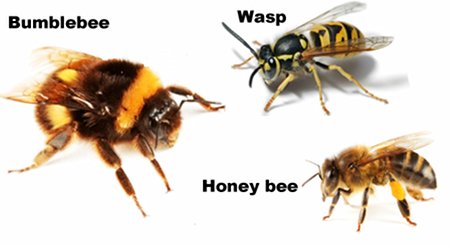
Ground activity may involve bees or wasps, including bumble bees or yellowjackets. An opening alone does not identify the species. Describe the flight pattern from a separate safe position and avoid mowing, digging, or lifting covers around suspected nesting. Normal flower visits are different from an occupied nest affecting household access.
Seasonal checks for Tequesta
Before yard work or exterior repairs, observe current entry from a safe, separate position. Describe cluster versus cavity entry and planned tree work. A date or a weathered nest alone cannot establish current occupancy.
UF/IFAS bee-proofing guidance identifies March through July as an important swarming period and notes that swarming can occur later, especially in southern Florida. Maintain checks beyond a fixed calendar window. After a storm, look for wasp activity before handling debris or damaged outdoor materials; do not disturb a suspected nest to identify it.
Before disturbing an opening: Keep people and pets away from active nesting. Do not seal a used entry, lift an occupied enclosure, or open a wall to investigate. Arrange identification and agree on the order of colony work, cleanup, and repairs.
Choosing honey-bee help in Florida
FDACS maintains a bee-removal reference list. Ask about beekeeper registration or appropriate pest-control credentials, experience with the location, insurance, the proposed method, comb and honey cleanup, and repairs. Live removal depends on the situation and the provider; do not assume relocation or building restoration is included.
Honey-bee appearance does not establish whether a colony is African-derived. Keep unfamiliar swarms and colonies undisturbed and arrange qualified assessment, especially near people or animals.
City-area reference
Explore the Tequesta, Florida area
Area reference map—not a service-coverage boundary. Use this map to orient yourself around Tequesta. It does not mark a Bro’s office or confirm service availability at your address.
The interactive city-area map loads as you scroll to this section.
Google Maps loads when this section approaches your screen, or when you click the button. Google’s map service then receives your connection information.
View larger map of Tequesta ↗ · Confirm exact-address coverage and any travel fee with the independent provider.
FREE PLANNING CHECKLISTS
Prepare for an inspection. Compare quotes clearly.
Keep a dated record of the problem, then compare written proposals for the same work. These free, two-page PDFs are ready to print and fill in; no signup is required.
Share your ZIP code and pest concern. Confirm the scope and full price with the independent provider.
Plan bee or wasp removal in Tequesta
For the Tequesta concern described above, ask what inspection can establish before work begins. Confirm whether access, pest work, nest or comb cleanup, and restoration are separate items in the estimate.
- Identification and access: Ask which insect and location the proposed work addresses and how the nest will be reached.
- Included work: Confirm treatment, nest or comb removal, cleanup, and follow-up separately.
- Repairs: Opening and restoring a structure or equipment may need another qualified contractor.
- Estimate: Request the provider’s price and terms before work; an exposed nest and a concealed colony involve different jobs.
Tequesta bee control questions
Can a tree crew remove the occupied branch first?
Coordinate assessment before cutting. Swarm collection and work on an established cavity colony have different requirements.
Can honey bees be removed alive?
Ask a qualified Florida provider whether live removal is feasible for the particular colony, access, and location. Confirm credentials, the method, comb and honey cleanup, and repair responsibilities. Swarm collection and removal from a structure are different jobs, and relocation is not guaranteed.
Is the ZIP code enough to confirm service?
Give the full physical address and ask the provider to confirm availability for that location.
Request bee and wasp help in Tequesta
Provide the physical address, affected structure, observed entry, and access restrictions. Describe the household task discussed above and ask the independent provider to confirm the proposed work.
Bro’s is a connection service. Independent providers set prices, availability, and service terms.
Florida information and resources
- FDACS: honey-bee removal, provider checks, and reference list
- UF/IFAS: Bee-Proofing for Florida Citizens
- UF/IFAS: Live bee removal in Florida
- UF/IFAS: Stinging insects and nest identification
- UF/IFAS: Wasps and storm cleanup
Bee Control in Nearby Communities
Looking for information for a home outside Tequesta? Explore these bee and wasp guides for nearby Florida communities. Each guide includes homeowner advice and local address references.
- Bee control in Jupiter, FL
- Bee control in Palm Beach Gardens, FL
- Bee control in North Palm Beach, FL
- Bee control in Lake Park, FL
These links help you find the guide for your community. Confirm service availability for your physical street address with the independent provider.
County & ZIP Codes for Tequesta
Municipal county reference: Palm Beach County
Mailing ZIP reference: 33469
The municipal mailing reference above is also associated with a broader postal area. Use the city and complete street address to identify the home rather than assuming postal and city boundaries coincide.
Mailing areas may cross municipal or county boundaries. These are address-planning references, not an exhaustive ZIP lookup or a coverage guarantee. Give the independent provider the complete physical address to confirm availability.
Florida mailing ZIP directory · Municipal reference source · Local mailing reference
Describe the pest, affected areas and ZIP code to start your request.
